
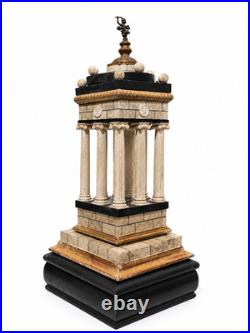
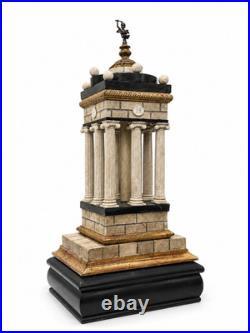
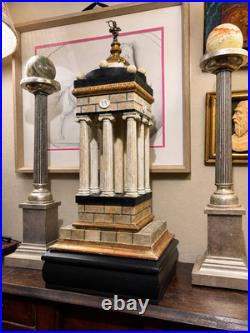
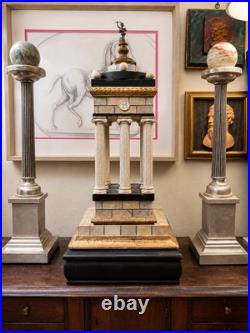
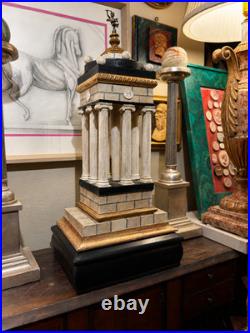
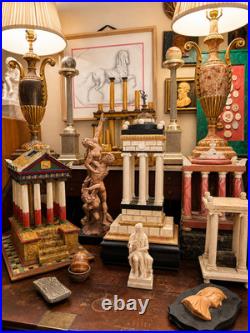
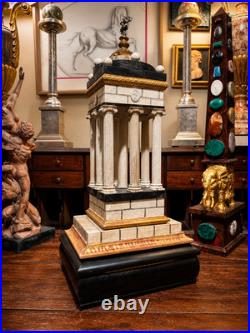
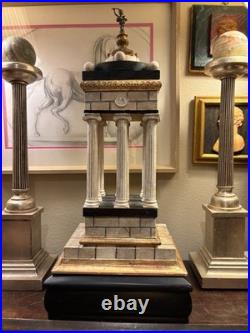
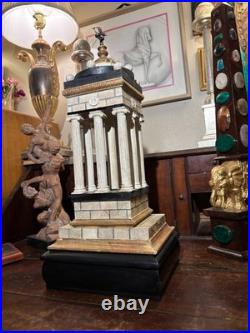
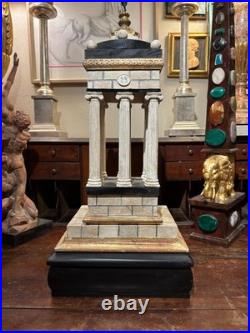
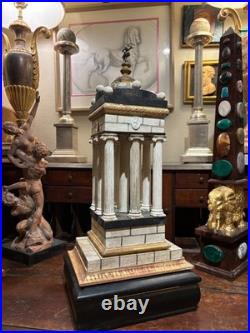
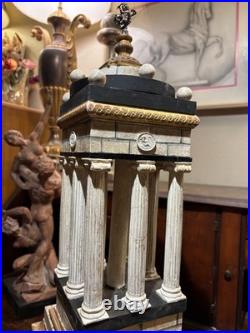
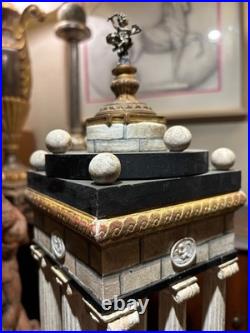
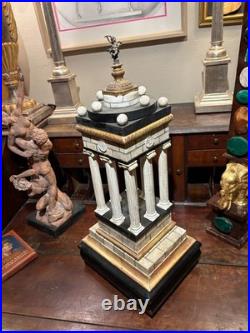
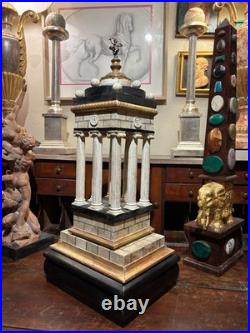

A Grand Tour architectural model conceived as a historicist interpretation of a temple dedicated to Cupid (Eros), executed in the Italian Neoclassical manner and inspired by the architectural vocabulary of the Classical Greco-Roman tradition. Constructed from carved wood and cast plaster with hand-applied polychromy, the model reflects the antiquarian and educational ideals that characterized Grand Tour architectural studies of the nineteenth century, presenting an idealized Classical composition rather than the reconstruction of a specific archaeological monument. The structure is elevated upon an ebonized stepped plinth supporting a molded podium finished in imitation of finely coursed ashlar masonry. A stepped stylobate carries an octastyle circular peristyle composed of fluted Ionic columns, supporting a continuous entablature ornamented with a Greek meander frieze beneath a molded cornice. Above the entablature rises an octagonal drum, articulated with applied tondi depicting winged putti, reinforcing the iconographic dedication of the monument to Cupid. The superstructure terminates in a low domical form encircled by spherical finials and is surmounted by an acroterial sculpture representing Cupid (Eros). Depicted in flight with bow and raised arm, the figure serves as the architectural culmination of the composition, uniting sculptural ornament with the Classical architectural scheme in accordance with Neoclassical design principles. Architectural members retain their original hand-applied polychromy, while restrained gilded detailing emphasizes the podium moldings, entablature, and crowning architectural elements. The measured relationship between the stylobate, peristyle, entablature, and drum reflects an informed interpretation of Classical proportion characteristic of architectural models produced for collectors, architects, and students of antiquity during the Grand Tour era. Rather than reproducing a documented ancient monument, the model presents an architectural synthesis derived from Roman commemorative temples, ornamental garden architecture, and the Italian Neoclassical tradition. Its balanced proportions, scholarly use of Classical architectural vocabulary, and carefully executed craftsmanship place it within the enduring legacy of Grand Tour architectural models created to celebrate the artistic and intellectual heritage of Classical antiquity.