




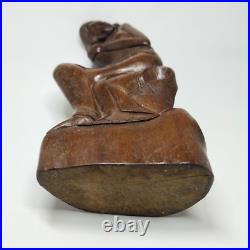









Pita Maha Woman Wood Sculpture – Vintage Mas Bali Carving, Ubud Art Movement. A fine Pita Maha-style wood sculpture of a Balinese woman, hand carved in Mas, Bali. This elegant 8 figure carries a dark aged patina and showcases the masterful skill of Balinese carving traditions. The Pita Maha Art Society was founded in 1936 in Ubud by Rudolf Bonnet, Walter Spies, Balinese royalty, and local master carvers. Their mission was to elevate Balinese art, guiding artists whose works were exhibited in Indonesia, the Netherlands, and the United States. Today, pieces linked to this movement are highly collectible and celebrated for their artistry. This sculpture, with its fine detailing and patina from age, represents both cultural heritage and Bali’s artistic renaissance. ? Origin: Mas, Bali – Ubud region. ? Material: Hand-carved wood with dark patina. ? Design: Female figure, Pita Maha style. ? Measurements: 20 × 8 cm (8″ × 3″). ? Period: Mid-20th century, Pita Maha art movement influence. ? Condition: Vintage, with natural wear, patina, and age imperfections. ? Perfect for collectors of Balinese art, ethnographic carvings, or Southeast Asian fine art, this piece reflects the spirit of the Pita Maha movement, blending spirituality, tradition, and master craftsmanship. Bring home a rare vintage Balinese carving that embodies Ubud’s artistic golden era and its connection to Rudolf Bonnet and Walter Spies. USA & Australia: 3-7 days via DHL Express. Rest of World: 5-10 days. Send a message before checkout to receive your personal coupon code. This listing is for 1 statue only. Colors may vary slightly due to individual monitor settings. For more than four decades, I have dedicated myself to the discovery and preservation of tribal art with a focus on shamanic traditions of healing and divination. My collection spans cultures and regions where art serves not only as expression, but as a bridge between the material and the spiritual. Each piece embodies ritual, protection, and transformation – testaments to humanity’s enduring search for connection with the unseen. This lifelong journey has been guided by respect for the artists, the communities they come from, and the sacred knowledge their works convey. The collection continues to evolve as a living archive of spiritual craftsmanship and human belief.